


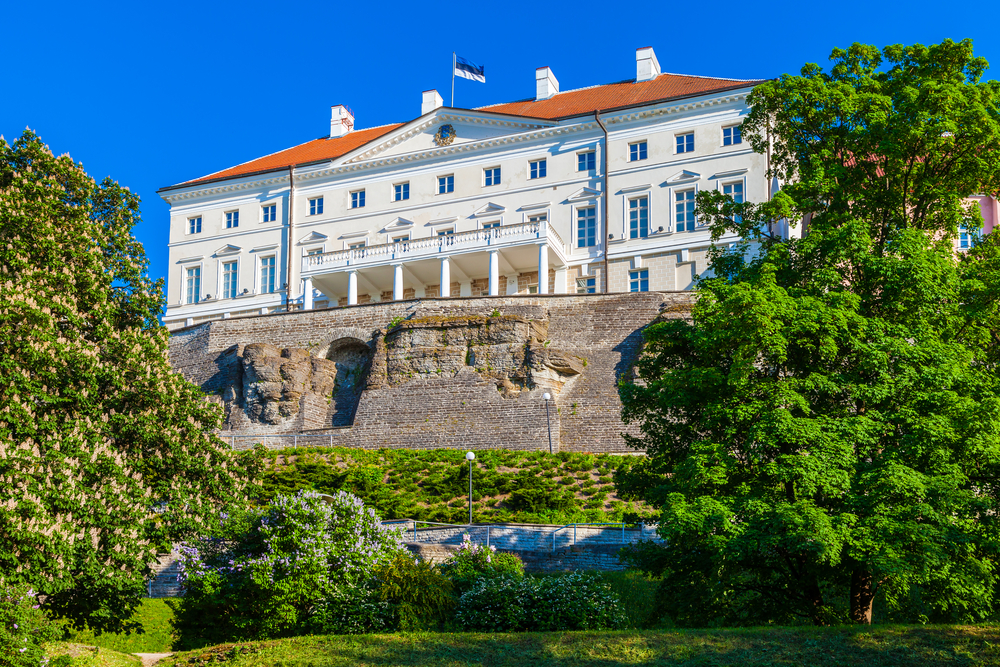
Estonia is a parliamentary republic in which the President of the Republic is head of state and the Government of the Republic exercises executive power. The Prime Minister directs the government, whose members are collectively responsible to the Riigikogu. This list identifies the president, prime minister and the 12 ministers serving in the 54th Government of the Republic as of September 28, 2026, including ministers with divided responsibilities within shared ministerial portfolios.
| Position | Officeholder |
|---|---|
| President of the Republic | Alar Karis |
| Prime Minister of the Republic of Estonia | Kristen Michal |
| Minister of Energy and the Environment | Erkki Keldo |
| Minister of Education and Research | Kristina Kallas |
| Minister of Justice and Digital Affairs | Liisa-Ly Pakosta |
| Minister of Defence | Martin Herem |
| Minister of Culture | Heidy Purga |
| Minister of Economy and Industry | Liina Vahtras |
| Minister of Finance | Jürgen Ligi |
| Minister of Regional Affairs and Agriculture | Hendrik Johannes Terras |
| Minister of the Interior | Igor Taro |
| Minister of Social Affairs | Karmen Joller |
| Minister of Infrastructure | Kuldar Leis |
| Minister of Foreign Affairs | Margus Tsahkna |
President of the Republic
The head of state represents Estonia in international relations, promulgates laws, appoints officials as prescribed, and exercises constitutional powers concerning government formation, legislation, defence and diplomacy. The office is distinct from day-to-day cabinet management and is elected by the Riigikogu for a fixed term. Constitutionally independent head of state; does not report to the Prime Minister or the Government of the Republic.
Prime Minister of the Republic of Estonia
The Prime Minister represents the Government of the Republic and directs its activities. The office leads cabinet coordination, determines ministers’ competences and areas of responsibility by order, oversees the government’s programme, and proposes ministerial appointments and changes to the President. The Prime Minister leads the Government of the Republic, which is collectively accountable to the Riigikogu and must resign if parliament passes a no-confidence vote in the government or prime minister.
Minister of Energy and the Environment
The minister leads the Ministry of Climate for the assigned portfolio, excluding infrastructure matters. Responsibilities include the green transition, energy and renewable projects, climate policy, environmental and nature protection, natural resources, monitoring, air protection, radiation and nuclear safety, geology and mineral resources. Reports to the Government of the Republic on the ministry’s work. The Prime Minister determines the minister’s competence; the cabinet is collectively accountable to the Riigikogu.
Minister of Education and Research
The minister leads the Ministry of Education and Research and develops education, research, youth and language policy. The portfolio promotes effective education policy, research excellence and competitiveness, directs the ministry and its agencies, and prepares proposals and budgets for cabinet consideration. Reports to the Government of the Republic on the ministry’s work. The Prime Minister determines the minister’s competence; the cabinet is collectively accountable to the Riigikogu.
Minister of Justice and Digital Affairs
The minister leads justice policy and the Ministry of Justice and Digital Affairs, covering legal and criminal policy, courts, prisons and prosecution administration. The portfolio also directs digital-society policy, cybersecurity and digital development, coordinates state information systems, and oversees telecommunications policy. Reports to the Government of the Republic on the ministry’s work. The Prime Minister determines the minister’s competence; the cabinet is collectively accountable to the Riigikogu.
Minister of Defence
The minister leads the Ministry of Defence and is responsible for organizing Estonia’s national defence. The office develops and implements defence policy, directs the ministry’s area of government, manages defence resources, appoints service commanders, and makes proposals on senior Defence Forces appointments. Reports to the Government of the Republic on the ministry’s work. The Prime Minister determines the minister’s competence; the cabinet is collectively accountable to the Riigikogu.
Minister of Culture
The minister leads the Ministry of Culture and is responsible for culture, sports, heritage protection, media and audiovisual policy, and national integration policy. The portfolio promotes the arts, cultural exports and creative industries, and carries statutory responsibilities relating to public broadcasting and cultural endowments. Reports to the Government of the Republic on the ministry’s work. The Prime Minister determines the minister’s competence; the cabinet is collectively accountable to the Riigikogu.
Minister of Economy and Industry
The minister leads the Ministry of Economic Affairs and Communications except for functions assigned to the justice and digital affairs portfolio. Responsibilities include economic and industrial policy, entrepreneurship, foreign trade, spatial planning, land-use policy, spatial data, land valuation, land reform and management of designated state land. Reports to the Government of the Republic on the ministry’s work. The Prime Minister determines the minister’s competence; the cabinet is collectively accountable to the Riigikogu.
Minister of Finance
The minister leads the Ministry of Finance and is responsible for fiscal and budget policy. The portfolio prepares and implements the state budget, manages public finances and state assets, develops tax and customs policy, oversees financial administration, and coordinates financial policy across the government. Reports to the Government of the Republic on the ministry’s work. The Prime Minister determines the minister’s competence; the cabinet is collectively accountable to the Riigikogu.
Minister of Regional Affairs and Agriculture
The minister leads the Ministry of Regional Affairs and Agriculture and oversees regional development, local-government matters, agriculture, rural development, food policy, fisheries and related land-management responsibilities. The office develops policies intended to support viable regions, rural communities, agricultural production and food-sector administration. Reports to the Government of the Republic on the ministry’s work. The Prime Minister determines the minister’s competence; the cabinet is collectively accountable to the Riigikogu.
Minister of the Interior
The minister leads the Ministry of the Interior and is responsible for internal security policy. The portfolio covers public order, police and border-guard administration, rescue services, crisis preparedness, migration and citizenship administration, civil protection, local security coordination and the ministry’s agencies. Reports to the Government of the Republic on the ministry’s work. The Prime Minister determines the minister’s competence; the cabinet is collectively accountable to the Riigikogu.
Minister of Social Affairs
The minister leads the Ministry of Social Affairs and coordinates social, health and labour policy. Responsibilities include public health, health-care organization, social protection, employment and labour-market policy, equal opportunities and the administration of relevant state agencies and public-service systems. Reports to the Government of the Republic on the ministry’s work. The Prime Minister determines the minister’s competence; the cabinet is collectively accountable to the Riigikogu.
Minister of Infrastructure
The minister leads the Ministry of Climate for the assigned infrastructure portfolio. Responsibilities include circular-economy and waste policy, housing and construction, transport and transport infrastructure, logistics and transit, maritime affairs, mobility services, traffic management, public-transport investment and road-safety policy. Reports to the Government of the Republic on the ministry’s work. The Prime Minister determines the minister’s competence; the cabinet is collectively accountable to the Riigikogu.
Minister of Foreign Affairs
The minister leads the Ministry of Foreign Affairs and conducts Estonia’s foreign relations under the government’s authority. The portfolio manages diplomacy, bilateral and multilateral relations, European Union and international policy, consular affairs, external economic relations, development cooperation and Estonia’s representation abroad. Reports to the Government of the Republic on the ministry’s work. The Prime Minister determines the minister’s competence; the cabinet is collectively accountable to the Riigikogu.
Last updated: September 30, 2026